History has a cruel sense of irony. Those who once stood at the center eventually find themselves at the margins. Every crumbled empire thought it would last forever.
The Ahoms who ruled for 600 years thought the same, and today not even one letter of Ahom abugida survives in modern Assam. The Assamese too thought their language and identity shall be immune to the passage of time. But how the tables have turned today.
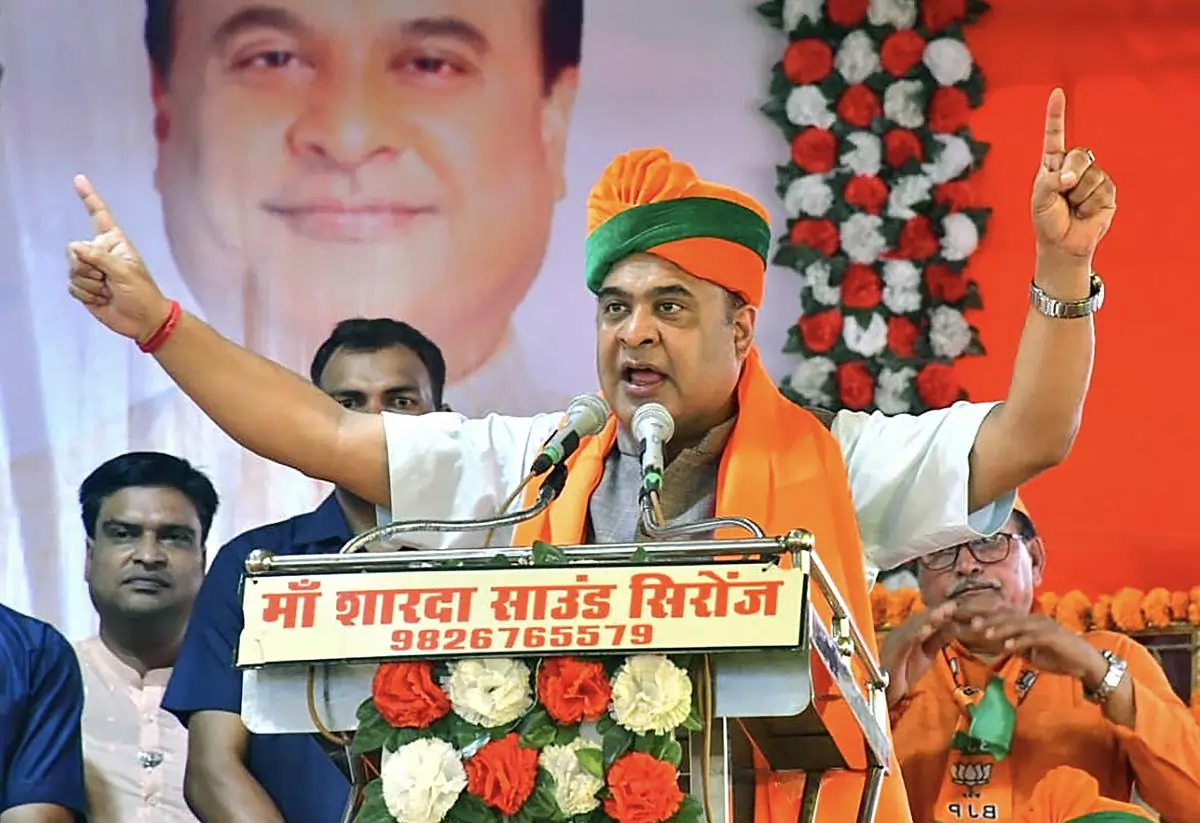
The Assam Legislative Assembly has added Hindi as their official language making Assam officially a Hindi-speaking state. This move shouldn't be seen merely from administrative or political lens. For it just represents another chapter in a much older story —the story of linguistic majoritarianism. For centuries, Assamese occupied a privileged position within Assam. After Aurangzeb's era, it replaced Ahom Language as the official language of court of Ahom Kingdom and gradually became the language of administration, education, literature, and public life. In that process however, many indigenous languages including Old Ahom Language were pushed aside.
Today, however, Assamese itself is beginning to experience what many tribal communities experienced decades ago. The predator has become the prey today.
Extinct Languages of Assam
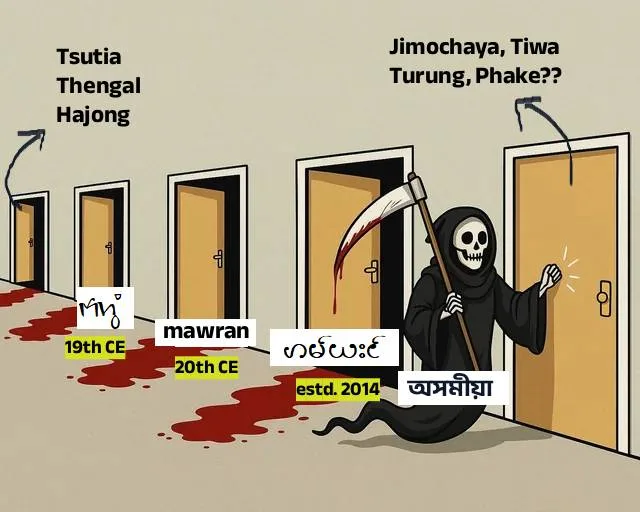
Perhaps no other state in whole of India has so many extinct languages as the state of Assam. The Old Ahom Language was recorded to be extinct in early 19th Century, Moran language was recorded to be extinct in early 20th Century and today infront of our own eyes Khamyang language has became extinct in 21st Century with only one remaining speaker left (Chikseng Thoumoung) who is well above the age of 80.
How Assamese dominance resulted in extinction of many Tribal Languages in Assam
This phenomenon shouldn't be seen as simple change of communication method. Because a language is never just a language but tools for domination and state building, much the same way as religion works as a tool for recruitment. In their zeal for power the Ahom Kings used the Assamese Language and Hinduism as tools in the same way as Hindu Nationalist Government of BJP is currently doing.
Earlier Upper Caste Assamese identity and Assamese language was the marker for prestige. Today North Indian Identity and North Indian language (i.e. Hindi) is set to replace Assamese and redefine the socio-linguistic landscape of East and Northeast India.
The Politics of Language
Language is the second most divisive issue after race and religion enough wars have been fought in modern time just for language (Bangladesh war and Tamil war are just some of the examples).
Languages become 'official' because they represent power. The politics of forcefully making Hindi as the official language of Indian Union and ongoing attempts to impose it in the Southern and Northeastern region of the country follows this same pattern.
The debate of Hindi Imposition is not a debate about cross-communication or a link language, for English already fulfils that rule. The Assam Assembly is not simply debating vocabulary. It is debating power.
Language is the basic foundation upon which an entire society is built
In very simple words, normalising Hindi language will give access to lot of Hindi people to settle in Assam, removing the extra barrier of learning local languages. Some people might see it reverse-way too and argue that if Hindi is promoted that would mean Assamese would also have more opportunities to go outside of their state and seek better opportunities. But Census 2011 Data shows that less than 0.1% Assamese speakers live outside Assam so the real beneficiaries are the Hindi speakers who will call Assam their home and dominate the administration and education system.
Assam already has salwar suit as official attire in Government Institutions because of North Indian Lobbying along with several government Hindi high schools. So making Hindi as official language of Assam Assembly shouldn't come as surprise to anyone already familiar with how the state has changed in past decades.
The New Majoritarianism
There is an uncomfortable truth that Assamese people rarely acknowledge. The growth of Assamese during the 19th and 20th centuries did not occur in an empty landscape. The so-called Jonaki Era was not about replacing Bengali with Assamese. Infact Bengali language was never the majority language of Assam.
The movement was rather aimed at getting Assam rid of its tribal roots. Even many Assamese words that came from Boro Khasi or Deori were replaced with Sanskrit words to purify the language. Moreover a very large sections of Assam originally spoke languages belonging to Tibeto-Burman, Tai-Kadai, Austroasiatic, and other linguistic families. Some learnt Assamese for trade, some for the facade of unity, and some because they knew no Assamese meant no jobs. Success required Assamese and parents naturally wanted their children to succeed. Generation after generation, mother tongues disappeared and entire cultures were wiped out through the resulting process creating modern Assamese nationalism.
I know a personal anecdote of a Tai Khamyang grandpa who used to speak in Tai with her sister in school so much so that even the teacher used to bully them — Oi ki chinese language bokiso, asomiat ko (what chinese language are you speaking, speak in Assamese). They faced so much bullying from their peers and the staff that they completely stopped speaking in Tai and didn't teach it even to their children. Many Assamese people when they hear a tribal name they automatically start judging them. Today their own identity and dominance is under threat because of Hindi. The lesson here is if you would not want your own language, culture, or identity to fade into history, then do not celebrate or hasten the decline of someone else's. As the Timeless Principle from the Holy Bible says, "So in everything, do to others what you would have them do to you." (Matthew 7:12)
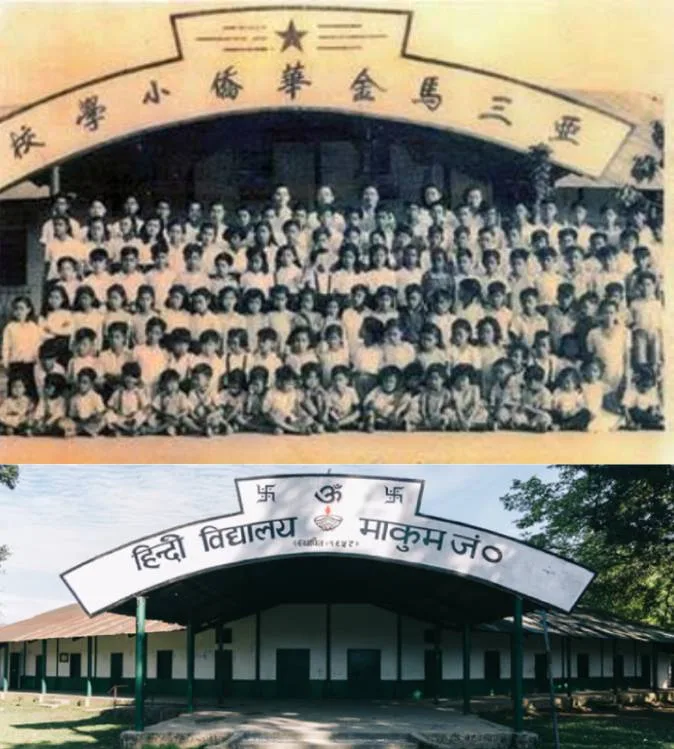
History has shown us again and again that today's majority could become tomorrow's minority and today's weak might become tomorrow's powerful. The Assamese people joined hands with Indian State Forces to oppress the local Chinese-origin people throwing stones at them after the 1962 war. Their homes were looted, their Chinese language school was destroyed and in its place a Government Hindi School was established.
No Assamese protested then, in fact they were laughing at the misery of the Chinese as they joined hands with Indian Armed Forces to evict all the Chinese speakers from Assam. Today, descendants of those Chinese people are living a much better life than their Assamese oppressors, who have today themselves become an oppressed subaltern in their own land.
After India lost the 1962 war, the Chinese people of Assam were forcibly evicted and the Chinese Language School of Makum was changed to Hindi School
What Assamese Apologists Say
The Assamese commonly believe that they just want to unite Assam, but every majoritarian apologist says the same thing. The Hindi people believe too that they are just uniting India but they refuse to see that every state of India has its own unique history and likewise every tribe of Assam has their own unique culture and language which has been regularly been sidelined.
This sidelining of indigenous languages was main reason why we have so many organizations like Bodo Sahitya Sabha, Karbi Sahitya Sabha etc because the "Assam Sahitya Sabha" is busy promoting only one language.
If Assamese unite Assam then Hindi which unites even a larger region of India should be given more importance and what is even the necessity of Assamese? Same kind of thinking was used by the Assamese intellectuals regarding tribal languages who saw these languages as irrelevant. Today those exact arguments are being used against Assamese.
Hindi is not another Indian Language
While I oppose Assamese imposition wholeheartedly, I don't exactly welcome Hindi imposition in its counter. I am also quite aware of all the arguments that Hindi supporters make – it is just an additional language, learning an extra language will make children smarter, etc etc. First if the goal is to make children smarter then they should learn Mandarin not Hindi. A language belonging to the same Indo-Aryan language family as Assamese will not produce the desired cognitive skills as learning a vastly different language like Dai or Chinese will.
Now coming to the first argument — for it is the most dangerous argument of all. The Dravidan Nationalists have long realized the catastrophe that shall unfold if they allow Hindi in South India. They have seen it first hand with English when a language first gets official recognition it changes incentives. Government officers begin using it. Recruitment increasingly favors it (additional paper in Hindi). Political speeches increasingly rely on it and Media follows (Hindu-Muslim politics get imported this way).
And soon it becomes an important language for job. Students prioritize it. Parents adapt. Within two generations, what began as an "additional language" often becomes the dominant one. Languages rarely disappear through prohibition. They disappear through irrelevance.
Ahom Language disappeared not because Ahom Kings banned it like the Meitei King banned Meiteilon. If Ahom Language was banned it might have even survived rather it faced the much sharper sword of irrelevance. All Kings starting from Rudra Singha stopped minting coins in Ahom, stopped giving any importance to Ahom and in exactly two generations Ahom Language became extinct not because it was banned or prohibited but because Assamese Language was promoted more and made official language of the Court.
Pretty much the same thing shall happen to Assamese, and at last the language that was responsible for extinction of so many tribal languages from Tsutia, Moran, Ahom, Khamyang, etc might itself become effectively extinct to irrelevance or might be forced to merge with Bengali to survive.
Future of Assam
Whenever a society accepts the idea that one language should dominate because it is more useful, more widespread, or more efficient, it establishes a principle. And that principle does not stop with the first victim. Eventually a larger language appears and then an even larger one. Maybe if tomorrow China invades Assam we might all be forced to speak Chinese and both Hindi and Assamese might lose ground. If utility and prominence alone determines which language should be official and which shouldn't then Chinese can be argued to have far more economic utility than Hindi Assamese combined as highest number of science journals are written in China today. And it is equally an important language for trade and commerce — unlike Hindi which doesn't even work in important trade hubs like Bengaluru, Vizag, Chennai, and to some extent Kolkata.
Then why are we not teaching Chinese to our children instead of Hindi? Simply because the state structures don't incentivize it unlike in Bangladesh where Chinese has recently become mandatory third subject from Class XI.
The lesson for Assam here is does it want to respect linguistic hierarchy (Hindi over Assamese and Assamese over tribal languages) or does it want to reject this hierarchy altogether and raise the banner against Hindi Imposition in Northeast India. That is to say Hindi might remain the unofficial means of communication between people but not get any official recognition or state support.
Conclusion
History rarely repeats itself exactly. It repeats its structures. Languages do not disappear because they are weak. They disappear because political institutions stop needing them. Ahom Kingdom stopped needing Ahom language for administration and it became extinct within just two generations. The same shall happen to Assamese, sooner or later.
The tragedy however is that Assamese now finds itself confronting the very forces of centralization that many indigenous languages once confronted within Assam itself
All Bodo Students Union (ABSU) deface signboards in Assamese to protest against Language Imperialism
If Assamese society truly wishes to defend linguistic diversity, it cannot defend only Assamese. It must defend every indigenous language—from Bodo, Garo, Rabha, Mising, Karbi, Dimasa, Jimochayan (Deori), Tiwa, Turung, Phake, Khamti, Aiton, and so on.... Assam doesn't belong only to Assamese. It belongs to all indigenous people. Meghalaya has 48% Khasis and Assam has 48% Assamese but while Khasi is not the official language of Meghalya being forced on the Garos, Pnars or Koches, but Assamese is being forced on every region of Assam and even places like Dima Hasao where no one can even read Assamese script, the signboards are painted in Assamese.
If Assamese is allowed to remain the official language of Assam then Hindi should also became the official language of Assam as it stands above the same hierarchy that Assam Government has itself promoted over the years. Because of Assamese imposition, the indigenous tribes from Assam (Karbi Dimasa) don't get any exemption from the Compulsory Indian Language Paper (Paper A) even though they suffer from the same socio-economic and geographic barriers as people from Nagaland Manipur or Arunachal.
Merely opposing Hindi in Assam Assembly won't work. We have to oppose the very structures that promote the language hierarchy and dilute Assam from its tribal roots and tribal civilization.
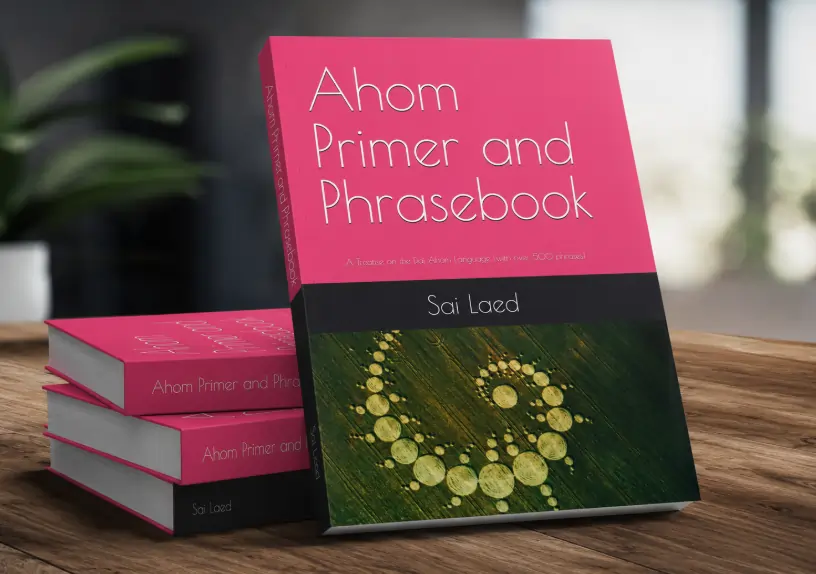
 Learn Ahom